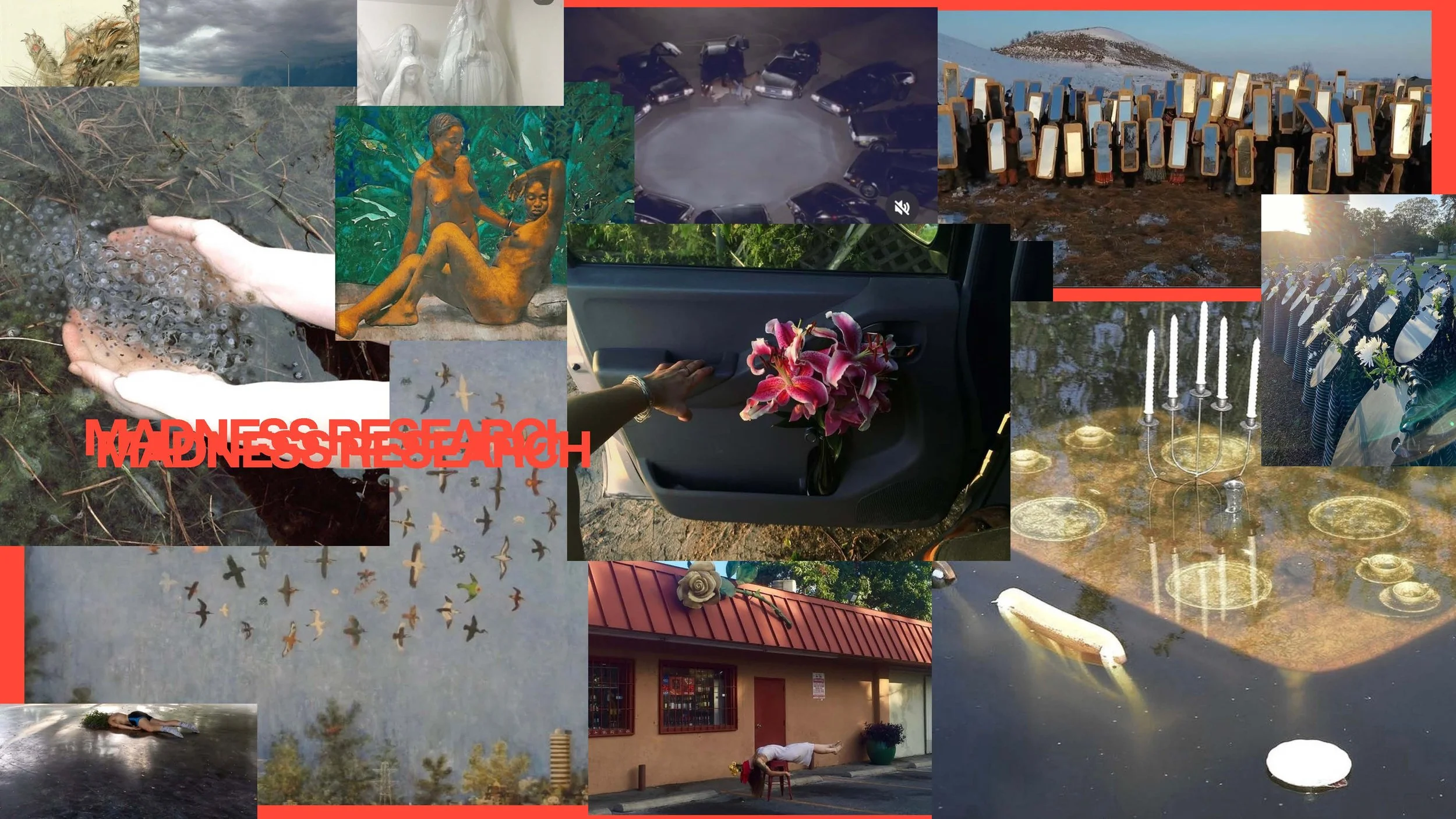
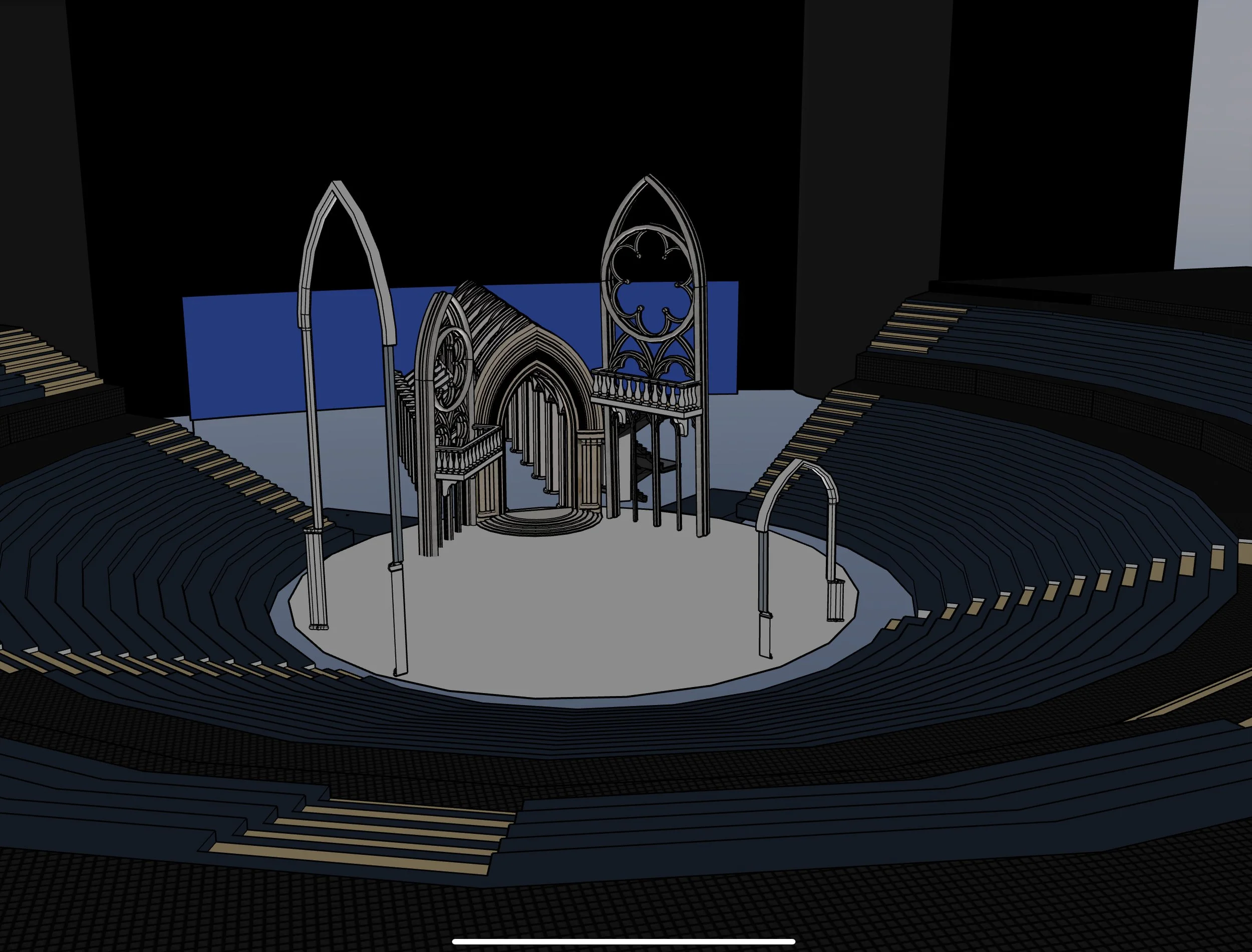
In this design of Hamlet, I take an approach that displaces power given to key characters. Shakespeare’s play is cantered with themes of loyalty, love, betrayal, and madness—emotions that radiate outward and touch and transform those around the experiencer. Hamlet himself is overcome and reckless with these emotions. In this design, I lean into that volatility. The world I create here pulls from landscapes that are familiar to my experiences in Florida, in places where I have felt these same emotional currents. Certain design elements are carried from one scene to the next just as these emotions reverberate amongst those close to you.
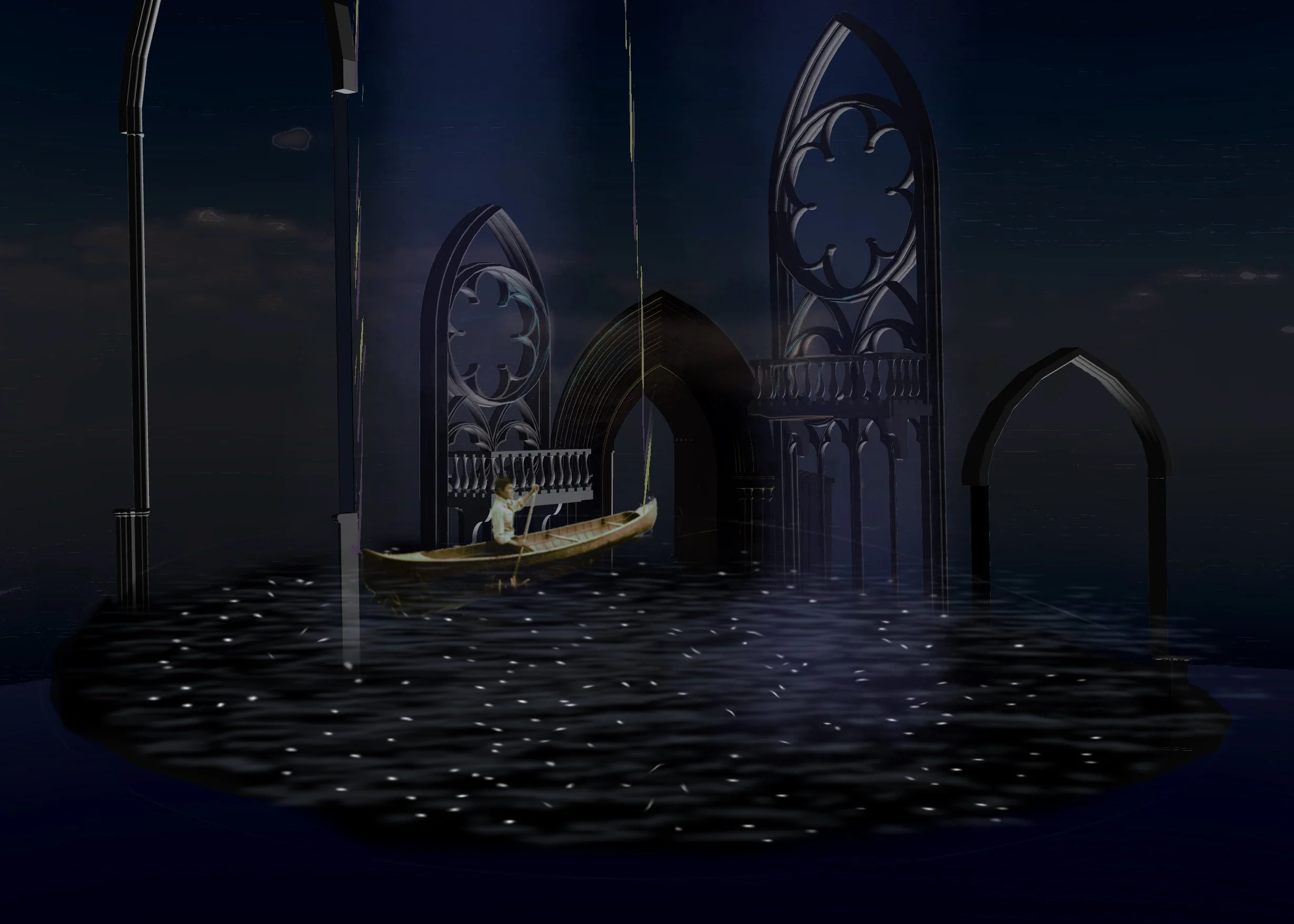
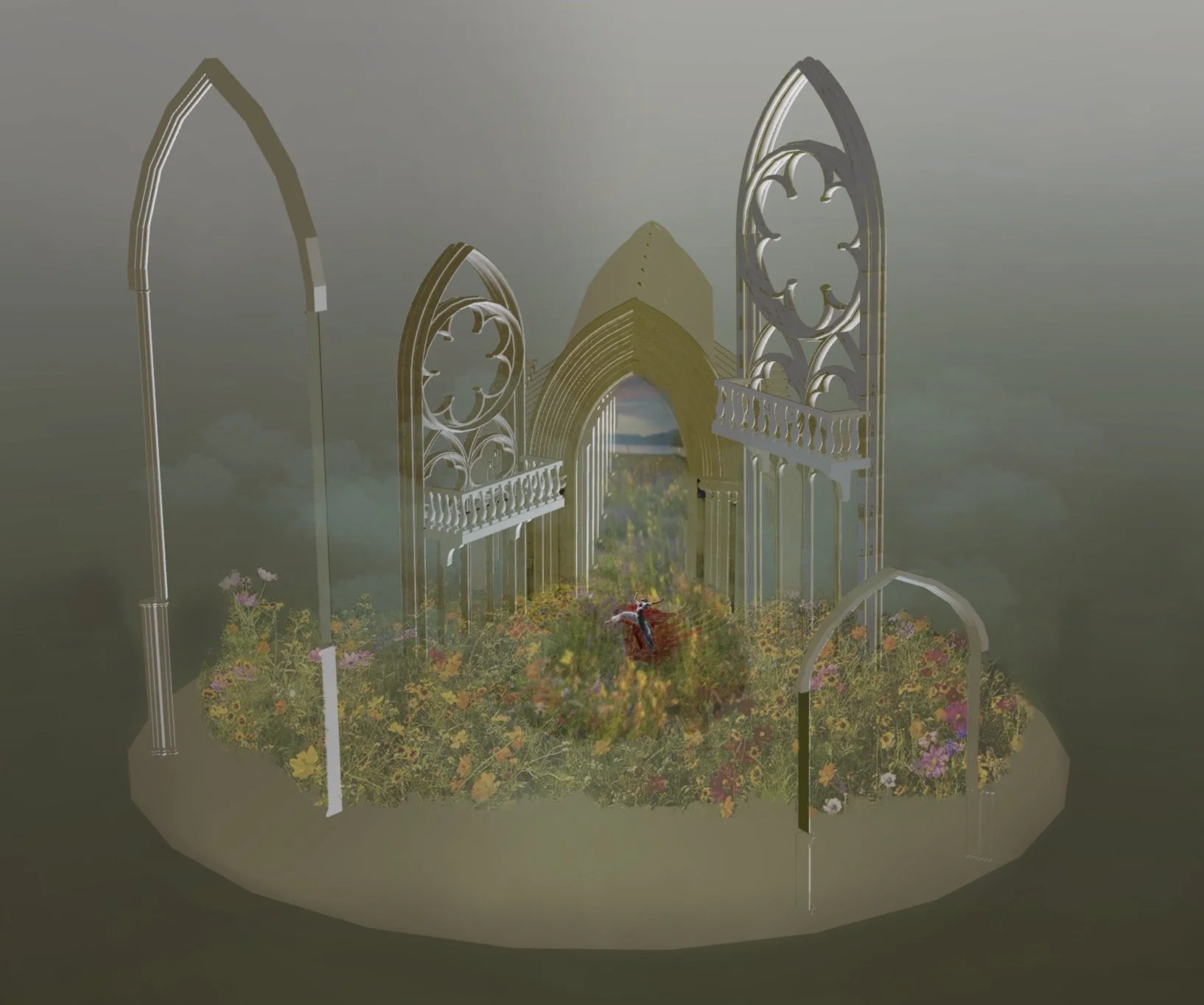
In Florida, sometimes a place is water, and sometimes it is land. My father’s ashes are in water in a temporal coastline, and in my dreams, he often returns to me in a boat. In Act I, Scene 5, Hamlet rows a canoe through shallow coastal water to meet his father, who waits in his own canoe. In Act III, Scene 2, a player in the Murder of Gonzago, overturns a canoe of water on stage that spills into the other players ear and onto King Claudius’s feet while onlookers witness from above. The same pool of water grows flowers in the Queen’s bedroom in Act III. Polonius is revealed to have been killed by Hamlet in this garden. Ophelia experiences madness under a canoe filled with water, suspended over a bed of flowers, and is later buried in a canoe Act V. These symbols—water, boats, flowers— powerful messengers and meaning carriers in the folklore of the Gulf region, where they serve as vessels of meaning, mourning, and transformation.